
You already know AI works. You’ve tried it. Your teams have tried it. AI answers questions, summarizes documents, extracts data from a PDF in seconds. None of this is new anymore — and yet, in most organizations, the productivity gains haven’t shown up the way the hype said they would.
Take a familiar example. You drop a contract into ChatGPT and ask: "Summarize this — key points, deadlines, risks." A few seconds later, you get back a clean, structured answer.
Subject: IT infrastructure maintenance
Term: 01.03.2026 – 28.02.2027
Amount: €84,000 (excl. VAT)
Risks:
• No SLA on response time
• Penalties apply only to the supplier
• Automatic renewal clause
That’s useful. That’s real. But notice what just happened — the AI gave you the answer, and now you have to do something with it. Forward it to legal. Flag it in the CRM. Schedule a follow-up. Email the supplier to renegotiate the SLA. The AI did the thinking. You’re still doing the work.
That’s because answering questions is only half the job. Real work doesn’t end with an answer — it ends with a finished task. The email sent. The ticket created. The record updated. The meeting booked.
That’s the gap AI agents close. This article explains, in plain English, what an AI agent actually is, how one works under the hood, why a multi-agent system is more than just “a bunch of chatbots”, and how we run them in production at Mitigate AI.
From answers to action
In almost every organization we walk into, the day-to-day flow with AI looks like this:
A human is doing knowledge work. The model is helping. But the human is still the courier — carrying answers between systems, pasting outputs into the next box, reformatting, re-prompting, re-pasting. The AI is doing the thinking. A person is still doing the commute.
The next step replaces the commute:
That single substitution is the entire bet behind AI agents.
So what is an AI agent, exactly?
Stripped of the hype, the definition is small:
An AI agent is an autonomous system able to reason, plan and adapt. It turns high-level tasks into concrete steps, interacts with the digital environment, and learns from experience — to reach user-defined goals.
A chatbot answers a question. An agent finishes the task.
To do that, an agent needs four things working together: memory, tools, planning, and action.
- Memory — short-term context for the current conversation, plus long-term knowledge accumulated over time.
- Tools — the systems the agent can actually act in: email, calendar, CRM, document stores, search, internal APIs.
- Planning — breaking a goal into steps, prioritising the most important first, self-correcting when something fails, tracking progress so it knows where it left off.
- Action — actually executing: sending the email, creating the ticket, updating the record.
A model without tools is a writer. A tool without a model is a button. An agent is what happens when you connect the two and give the result a goal.
The real leverage: multi-agent systems
A single agent is useful. A coordinated team of them is something else entirely.
In a multi-agent system, you don’t talk to one agent — you talk to an orchestrator. The orchestrator splits the task, routes work to specialised agents (Research, Communication, Documents, Procurement, Analytics, Admin…) and merges their results back into one answer.
You ask one question. Six agents move in parallel behind it. You don’t see the choreography — you see the outcome.
This is where AI stops looking like a smarter search bar and starts looking like an extra team. Not a replacement for your people — an extension of them. People keep judgment, relationships, and accountability. Agents take the routine, the repetitive, and the cross-system busywork that was eating their week.
How the Mitigate AI platform actually runs its agents
Defining an agent is the easy part. Running one safely inside an enterprise — with real permissions, real data, and real consequences — is where most projects stall. Here’s how our platform handles it.
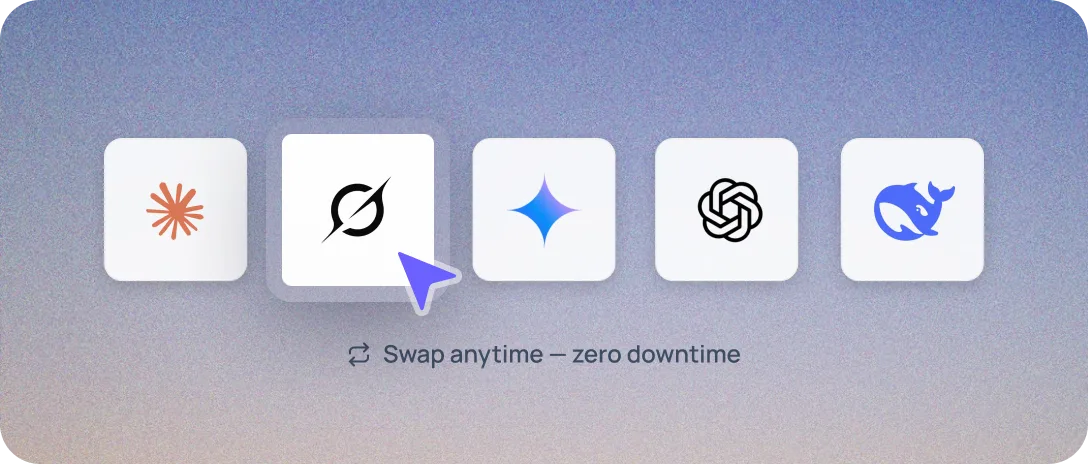
Any model
OpenAI, Anthropic, Google Gemini, DeepSeek, Mistral, OpenRouter — picked per workspace, switchable any time without retraining.
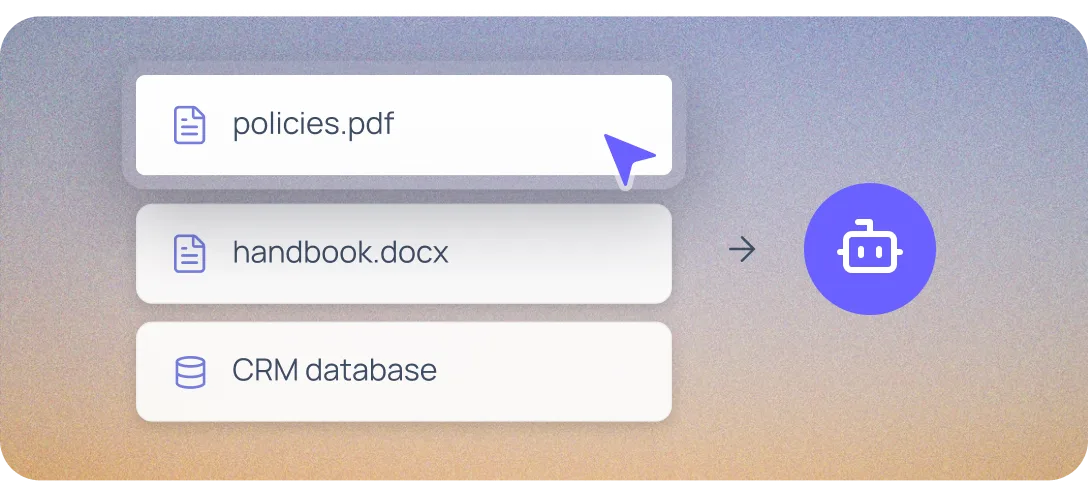
Your data
Each agent is scoped to a business function with its own connectors, knowledge base and permission boundary.
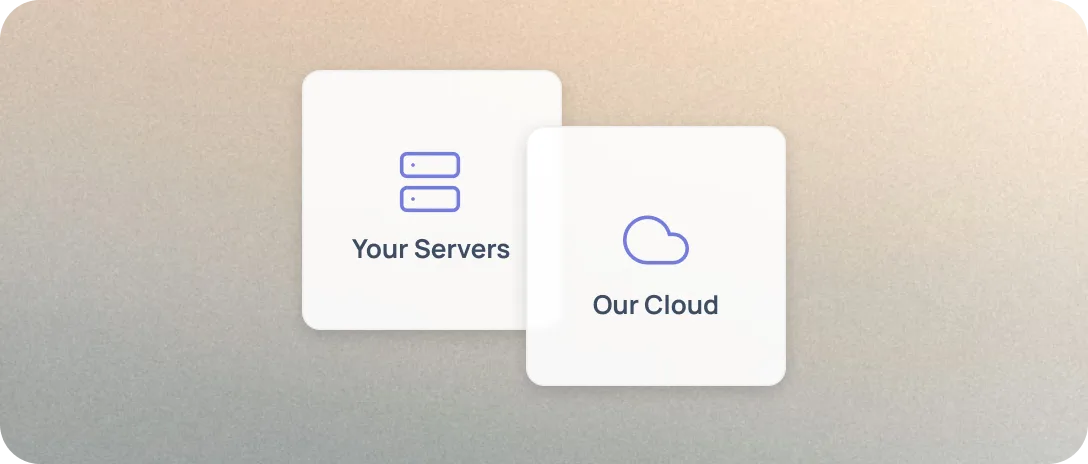
Deploy anywhere
Mitigate's infrastructure or your own — Docker Compose, Kubernetes, AWS EKS — with on-premises and configurable retention.

Live in days
Production deployments inside one week. The first agents are live in 1–2 months, on a starter budget of €10–30k.
Connected to the systems your teams already use. If it’s digital, you can connect it — Mitigate AI ships with connectors for the tools your business already runs on, and agents don’t just generate suggestions for someone else to copy-paste. They take real action inside those tools.





Secure access through your existing identity provider. Agents connect to your business systems the same way your employees do — through your single sign-on provider (Entra ID, Okta, Auth0, Google Workspace, Keycloak). Each agent acts on behalf of a named user, with that user’s permissions, inside that user’s audit trail. Nothing the agent does falls outside the access controls and accountability your IT and security teams already trust.
Each agent is scoped to a business function. Every agent has its own connectors, its own knowledge base, and its own permission boundary. The engineering agent cannot read HR data. The support agent cannot reach financial records. Isolation is the default, not an afterthought.
Pending → approved → executed, with no exceptions. Sensitive actions don’t fire silently. The platform enforces an approval workflow: the agent proposes, a human approves, the system executes. Every step is logged. The chart never makes it into the leadership deck before a human has signed off on it.
Observability built in. Conversation analytics, cost tracking per LLM provider, and deep tracing on every response — so you can see exactly what an agent did, how much it cost, and why.
The point of all of this: the leap from a clever demo to something a regulated business will actually deploy is governance. The platform is built around that gap.
Where this is paying off today
Agents aren’t a search for a problem. These are real use cases already running on the platform — each one a small redesign of how the work flows.
Employee helpdesk
Employees ask about policies, onboarding, expense rules, schedules — and get answers with exact references back to the source documents. HR stops repeating itself.
And a handful of others running on the same platform:
- AML & compliance. A compliance assistant runs client checks, analyses transactions and flags risks, all from a single chat. The analyst stays in the loop; the busywork doesn’t reach them.
- Field inspections. Inspectors dictate notes on-site in any language. They walk away with a structured Excel report — first note to finished document in minutes, not days.
- Building condition reports. Verbal findings become standards-compliant reports automatically. No forms, no transcription evening.
- Tenant portal — property manager. Registration, announcements, scheduling, day-to-day building operations — all conversational.
- Tenant portal — building concierge. Residents report issues and submit meter readings through chat instead of phone calls or paper forms.
- Email & calendar. One chat to search the inbox, read the thread, draft the reply and book the meeting. Inbox-zero as a side effect, not a project.
- Regulatory impact. Legal teams track new regulations, map them to products, extract obligations, run gap analysis and brief stakeholders — through conversation, not a 40-tab spreadsheet.
The pattern is the same in every one: a task that used to bounce between humans, systems and forms collapses into a single conversation, with the agent doing the legwork.
How to get started with the Mitigate AI platform
You don’t need an enterprise-wide rollout to find out whether agents work for your team. The fastest path is to pick one painful, repetitive task and build the first agent around it. A few good starting points:
- The question HR keeps answering. Onboarding, expense rules, time-off policy — anything that lands in the same inbox over and over.
- The Monday-morning report. Numbers someone manually pulls from three systems and pastes into a slide every week.
- The inbox triage. Incoming requests that need to be classified, routed, and acknowledged before anyone can actually work on them.
- The recurring client check. AML reviews, supplier vetting, contract renewals — structured work where the rules are written down but the legwork is manual.
Pick one. We’ll handle the rest — connectors, governance, deployment, the lot. Get in touch.
The bottom line
An AI agent isn’t a chatbot with extra steps. It’s memory plus tools plus planning plus action — wrapped in the governance an enterprise actually needs, plugged into the systems your teams already live in.
The first wave of AI made knowledge work faster. This one makes it finish.
Ready to see what AI agents could actually do inside your business? Get in touch and let’s talk.